Project To Improve Measurement Of The Body Burden Of Mercury:
The accepted and current methods of measuring the levels of mercury in a living human body do not provide meaningful values by which one can measure mercury toxicity and brain or organ tissue concentrations of mercury. Alternative methods of measurements need to be either explored or developed. The measurement of mercury burden would be helpful to determine toxicity levels to qualify a patient for detoxfication or to determine if a particular detoxification therapy is effective. ,
Mercury can enter the human body directly through the skin, respiratory tract, and gastrointestinal tissues, and quickly combine with thiol-containing proteins and enzymes due to the high affinity of mercury and thiols (sulfur). The accumulated mercury in the human body affects relevant physiological activities, eventually causing dibilitating conditions.
This project page seeks to motivate research in the field of mercury measurement of the human brain, nervous system and organs without requiring an autopsy or patient harm. Measuring human hand skin tissue (in situ or from a biopsy) as a proxy for the unaccesible brain, may have to be considered a valid technique.
Current Techniques Used To Measure The Body Burden Of Mercury:
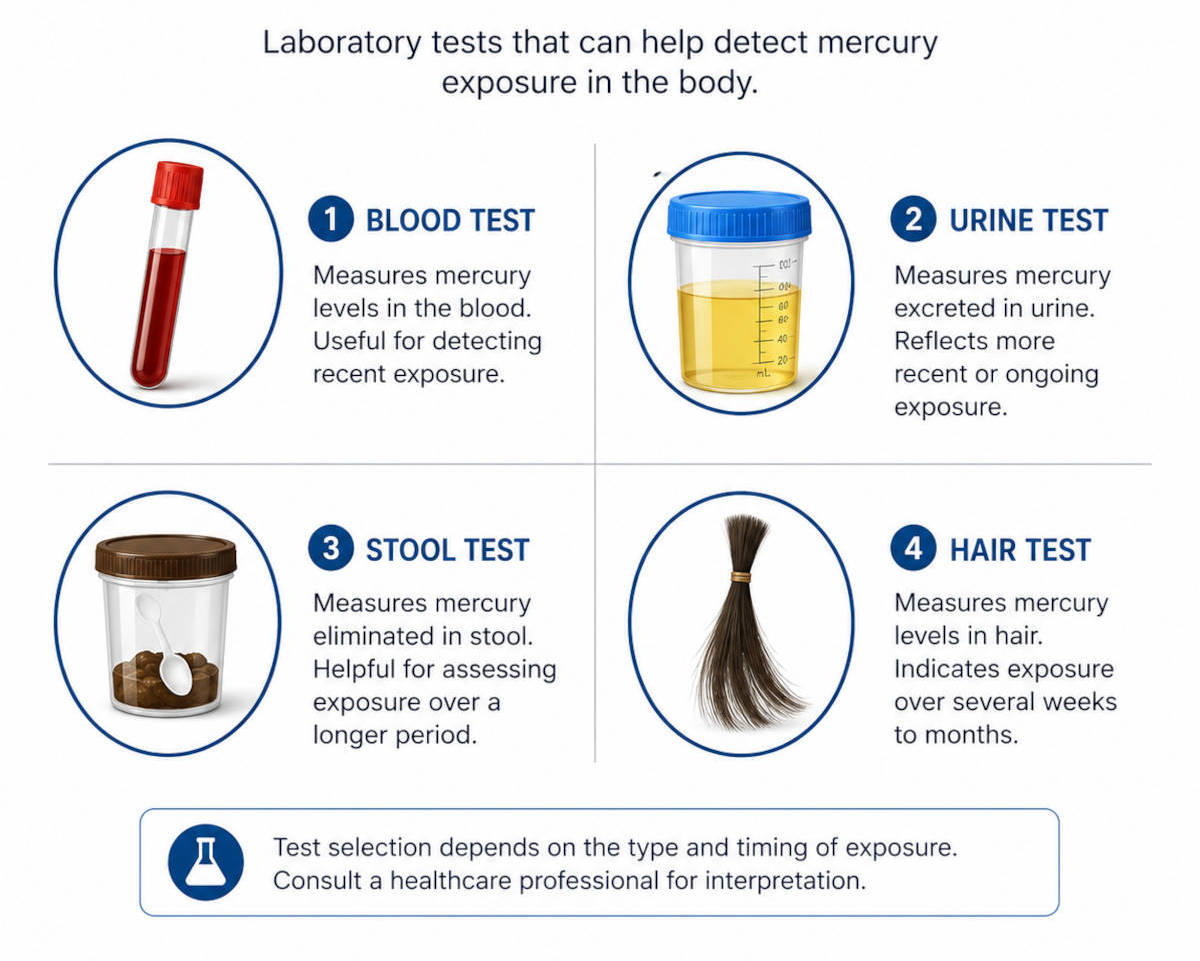
Current techniques used to measure the human body burden of mercury fail to report any relevant values. Blood tests, hair tests, urine tests, and stool tests all fail to report a value of any significance because mercury binds to human tissue rather than migrating freely in blood. Being bound to tissue also hinders murcury from being evicted via urine, or stool. Mercury found in a hair test rarely reflects the body burden in neurons or organs. On the other hand, the patient is likely to object to an autopsy to measure mercury levels in the brain or organs.
The four basic and common tests for mercury: blood, urine, stool and hair test.
Challenge Tests: Challenge tests stir up mercury by using a mercury chelator which binds to mercury and frees it from the bond it had with human tissue. This causes a spike in mercury measured by blood, urine, stool, and hair tests. Challenge tests are often discredited due to the fact that they stir up and mobilize mercury to cause a worsening of one's health while always indicating intoxication. Note that it is not necessarily a false positive, as one has to have mercury present that can be provoked. These tests are typically showing a mercury presence that researchers choose to ignore.
This project is motivated by the fact that scientists need an accurate and acceptable means to report the body burden of mercury.
OligoScan: One system comes close to being able to measure the body burden of mercury, the Oligoscan, a metals scan that uses light spectroscopy (spectrophotometry) to measure directly the body burden of mercury in the hand as a proxy for the mercury burden in brain neurons. The hand will contain blood, cellular tissue and interstitial space, all of which will contribute to the measurements in the scan. Measurement is based on the scientific principle that every chemical element absorbs, emits or reflects light (electromagnetic radiation) of a given wavelength (Beer-Lambert's law). The more the tissue is concentrated with a given element, the more it absorbs the light of a corresponding specific wavelength. The scan compares the measured values with those gathered from other subjects but does not produce values in absolute terms such as parts per million, or micrograms per deciliter. Further research is required to convince skeptics of the value of an Oligoscan. This can be done with measurement of essential minerals such as magnesium, zinc, potassium, iron, calcium, etc. For obvious safety reasons one would not expose a human to any form of mercury. Calibration and measurement data verification seems to be elusive for this product.
Other medical measurement applications of light spectroscopy and Beer-Lambert's law include:
- measurement of blood oxygen saturation level
- cerebral tissue oxygenation index via forehead skin (see: Hamamatsu Photonics, NIRO-300)
- skin relative concentration estimation of melanin, oxyhemoglobin, and deoxyhemoglobin
See the following content for more on measuring the body burden of mercury including challenge tests.
Conclusion: Measuring mercury burden in blood, urine, stool or hair in no way indicates the burden in the brain or organs, and the Oligoscan, while more helpful, does not get any respect in the medical community.
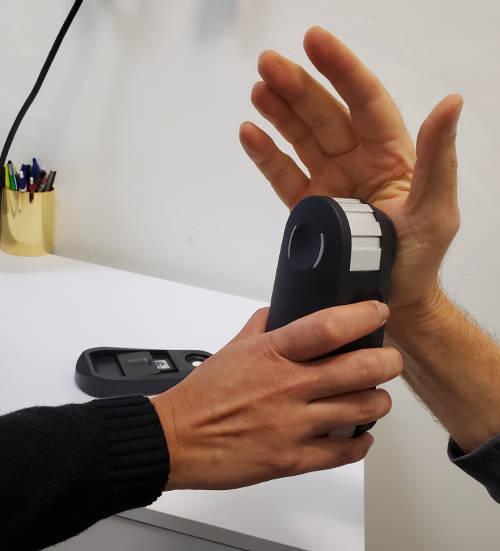
OligoScan scans four points on the hand.
Laboratory Techniques Used To Measure Mercury:
A different approach to measuring the body burden of mercury will be required in order to determine if one has a significant intoxification of mercury. The notion that measuring a skin mercury burden as a proxy for an indication of concentration in brain or organ tissue is a thesis used by the Oligoscaan and may be adopted by others.
Biopsy:
This invasive technique is rarely used to measure the human mercury body burden. Biopsies are typically reserved for fish or wildlife studies. Adopting the use of a biopsy of human tissue does open up a lot of additional measurement techniques. Patient rejection of this invasive option also can't be ignored.
Use of a biopsy for Mercury Detection and Analysis:- DMA: Direct Mercury Analysis
No papers or standards found for DMA measurement of mercury in human skin or organ biopsy tissue nor any reference samples (used for calibration).
Also see DMA for blood, hair and urine samples.
DMA has used the following detection techniques:- TDA-AAS: Thermal Decomposition, Amalgamation and Atomic Absorption Spectrometry. Can measure trace amounts of mercury in blood, urine or hair as well as tissue from a biopsy.
Sensitivity: 0.01 - 0.05
Paper on TDA-AAS measurement of mercury on a whale biopsy: Exploring the Use of Skin Biopsies to Infer Organ Mercury (pdf)
Mercury measurement followed an internationally standardized protocol for investigating stranded marine mammals (ASCOBANS 2019). While this standard does not apply to humans, this guide might be applicable or at least be a good starting point for the development of a human standard for the measurement of mercury in a human tissue biopsy.
- TDA-AAS: Thermal Decomposition, Amalgamation and Atomic Absorption Spectrometry. Can measure trace amounts of mercury in blood, urine or hair as well as tissue from a biopsy.
Sensitivity: 0.01 - 0.05
- CVAAS: Cold Vapor Atomic Absorption Spectroscopy
Mercury in a test sample is converted to a vapor. Measures the light absorbed by the vapor. Can measure trace amounts in blood, urine or, hair. Most accurate in measuring total mercury.
(Requires sample preparation.) Sensitivity: 0.01 - 0.1 ppb - ICP-MS: Inductively Coupled Plasma Mass Spectrometer
Uses mass spectrometry rather than light spectroscopy. Used to determine different mercury types. Highly sensitive (parts-per-trillion); requires liquid digestion. Sensitivity: 0.001 ppb - ICP-AES: Inductively-Coupled Plasma Atomic Emission Spectrometer
Detection limits for mercury in the range of parts per billion (ppb, or (micro g/L). Best for high-concentration samples; less sensitive for mercury. Sensitivity: 1 - 10 ppb
Terms:
- CRM: (Certified Reference Material) is measured to validate the machine's calibration.
Also See:
- EPA 7473: Determines total mercury in solids and solutions by thermal decomposition, gold amalgamation and atomic absorption spectrometry (pdf)
Applicable to Soil, sediment, sludge, aqueous wastes, groundwater, fish, and biological tissues. - Total Mercury Analysis Comparison (pdf)
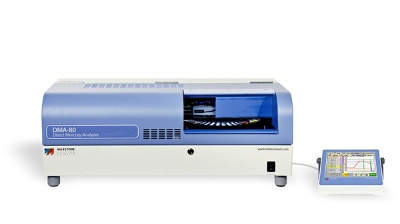
Milestone DMA-80 Direct Mercury Analyzer: mercury analysis in almost any sample matrix including liquids, solids, and even gases without sample preparation.
Employs Thermal Decomposition, Catalytic Conversion, Amalgamation, and Atomic Absorption Spectrophotometry.
Compliant with EPA 7473.
Mercury Measurement Techniques In Development:
Mercury measurement techniques in vivo, especially in deeper tissues (such as the brain), is still insufficient. The ability to detect both inorganic and organic mercury is of great clinical significance for evaluating the severity of mercury-induced poisoning
NIR II:
A new activatable NIR-II (Near Infrared) in vivo probe, NIR-Rh-MS, based on the xanthene "spirolactam close/open-switched fluorescence" tactic, was designed and prepared for the intravital (examination on a living subject) imaging of MeHg+ and Hg2+ with high specificity, signal-to-background ratio (SBR), and deep penetration depth (up to 7.0 mm). Study performed a scan on the brain and liver of a mouse.
See: Monitoring Hg2+ and MeHg+ poisoning in living body with an activatable near-infrared II fluorescence probe (2023, Zhiqiang Mao, Zhihong Liu et al, Hubei University)
Call To Action:
This web page is meant to instigate and inspire a call to action to develop new techniques to measure the body burden of mercury residing in the human brain, nervous system and organs or other tissue serving as a proxy.
There are also some relevant tasks:
- Oligoscan: Testing with essential minerals to verify validity of test results. Testing with mercury is not plausible.
- Push the boundaries of light spectroscopy by varying frequency, spot size, etc. to penetrate deaper into the skin.